Car Overheating in Winslow, AZ? Do This Right Away
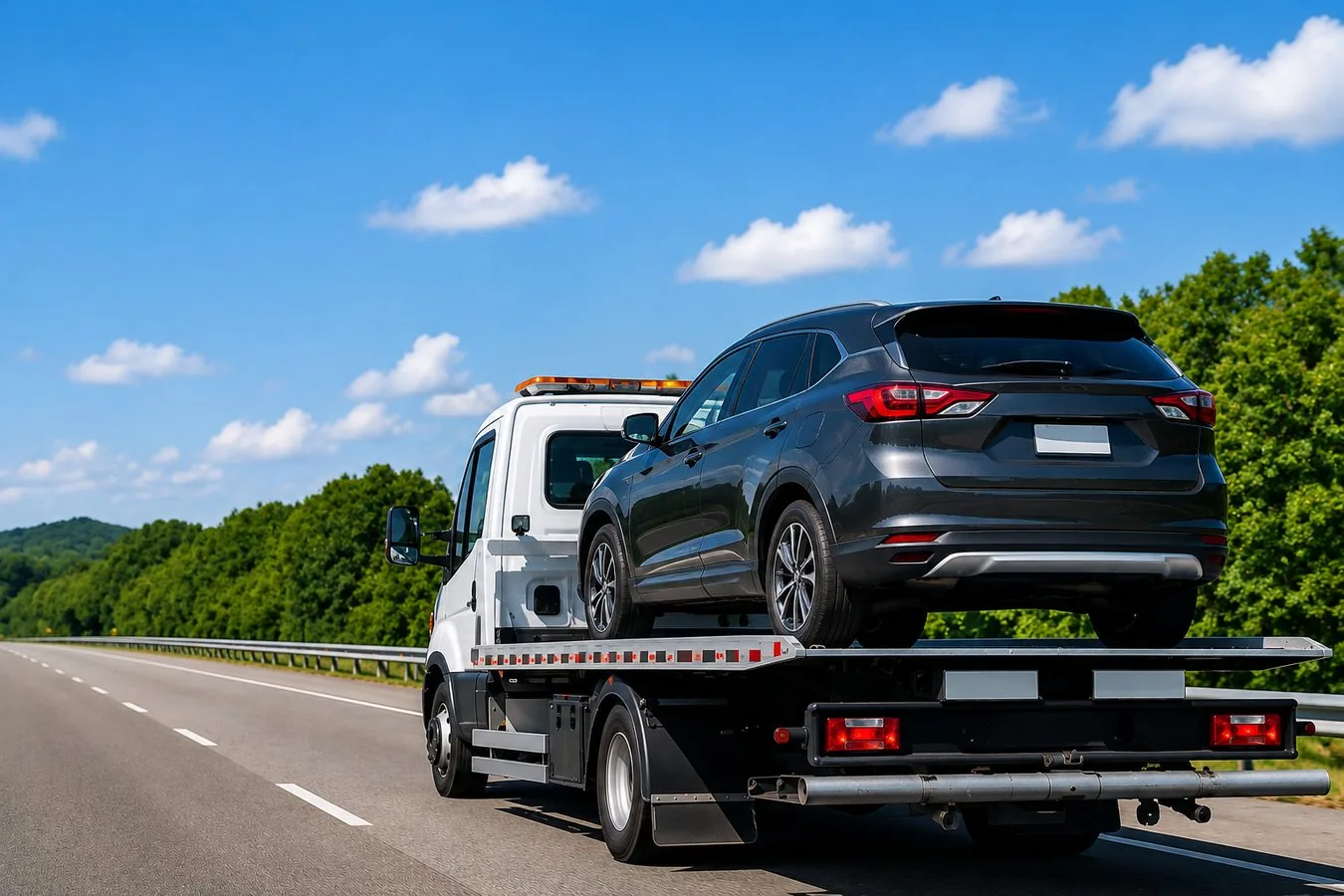
There is a specific kind of dread that hits when the temperature needle starts climbing on a summer afternoon between Winslow and Holbrook. The AC starts blowing warm, a sweet smell drifts through the vents, and steam begins curling out from under the hood. Out here on the high desert, with long empty stretches of I-40 and AZ-87 and July pavement temperatures that can top 130 degrees, an overheating engine is not just an inconvenience. Handled wrong, it can crack a cylinder head or blow a head gasket in a matter of minutes. Handled right, it is often a roadside pause and a tow, nothing more.
This guide walks you through exactly what to do the moment your car overheats in Winslow or anywhere across Navajo County, what you should never do, and when it is time to stop driving and call for a flatbed. Winslow Towing runs 24/7, and we would much rather send a truck than watch a driver turn a $40 hose into a $3,000 engine job.
First: Get Off the Road Safely
The instant you see the gauge in the red or steam from the hood, your only job is to get the vehicle stopped in a safe spot and the engine shut off. On I-40 that means signaling early, easing onto the right shoulder well away from the travel lane, and getting the car as far from traffic as you can. If you are on Route 66 through town or on AZ-87 heading toward Winona, aim for a wide shoulder, a gas station lot, or any level pull-off.
Turn on your hazard flashers before you slow down so drivers behind you understand what is happening. Once stopped, put the vehicle in park, set the parking brake, and shut the engine off completely. Every extra minute a hot engine runs adds heat it cannot shed. If it is dark or visibility is poor, set out reflective triangles or a flare behind the car. On the shoulder of a 75-mph interstate, staying visible is not optional.
What to Do the Moment You Stop
Once you are safely off the road with the engine off, a few simple actions protect both you and the vehicle:
- Leave the hood closed for now. A boiling cooling system is under pressure. Popping the hood immediately does nothing useful and can expose you to escaping steam.
- Turn the heater on full blast. If the engine is still running when you first notice trouble, cranking the cabin heat to maximum actually pulls heat off the engine and into the cabin. It is uncomfortable on a Winslow summer day, but it buys the engine a little relief while you find a place to stop.
- Watch the gauge and the steam. Give it time. A hot engine needs at least 20 to 30 minutes before anything under the hood is safe to touch.
- Get everyone out and away from traffic. Passengers should wait behind the guardrail or well off the shoulder, never inside a car parked on the edge of I-40.
These first few minutes matter more than anything you can do with a wrench. The goal is simply to stop adding heat and keep everyone safe while the engine cools.
Never Open a Hot Radiator Cap
This is the single most important safety warning for any overheating car, and it is worth its own section. A cooling system that has just overheated is full of coolant heated well past its normal boiling point and held there by pressure. Twisting off the radiator cap or coolant reservoir cap while it is hot releases that pressure instantly, and superheated coolant and steam can erupt several feet into the air. Serious scald burns to the hands, arms, and face are common and entirely avoidable.
Wait until the engine is fully cool to the touch, which after a real overheat means at least 30 to 45 minutes. Even then, if you must check coolant, use a rag and turn the cap slowly to the first stop to let residual pressure vent before removing it. The U.S. Department of Transportation and its safety agency, the NHTSA, consistently stress the same point: when a vehicle is disabled on a highway, your safety and the safety of passing traffic come first, ahead of any attempt to diagnose or repair it on the shoulder.
Why Cars Overheat on the High Desert
Understanding the cause helps you judge whether you are looking at a quick fix or a tow. Around Winslow, a handful of culprits show up again and again:
- Low or leaking coolant. A cracked hose, a weeping water pump, or a slow radiator leak drops coolant below the level needed to carry heat away. This is the most common reason engines overheat here.
- A failed thermostat. A thermostat stuck closed blocks coolant from reaching the radiator, and the temperature spikes fast even on a short drive.
- A bad water pump. If the pump cannot circulate coolant, the engine cannot shed heat no matter how much fluid is in the system.
- Cooling fan or belt failure. In slow town traffic on Route 66, the fan does most of the cooling. If it quits, temperatures climb quickly at low speed.
- Desert heat plus a heavy load. Towing a trailer, a full load, and a steep grade on AZ-87 in July can push a marginal cooling system over the edge even when nothing is technically broken.
Some of these, like a small coolant top-off, might get you moving again. Others, like a blown water pump or a failed thermostat, mean the safest choice is to stop driving and get the vehicle to a shop on a flatbed.
When It Is Time to Call a Tow
Not every overheat requires a tow truck, but plenty do. Call for professional help if any of these apply:
- The temperature gauge climbs back into the red within a mile or two of restarting.
- You see coolant pooling under the car or a steady leak you cannot stop.
- Steam or white smoke keeps coming from the hood after the engine has cooled.
- You hear knocking, or the engine ran hot long enough that you smell burning oil.
- You are simply not sure, and you are stranded on I-40 miles from town.
Continuing to drive through any of these is how a routine overheat becomes a warped head or a cracked block. A flatbed is the right tool because it carries the vehicle with all four wheels off the ground and the engine completely off, so no additional heat or damage builds up on the way to the shop. Winslow Towing crews are licensed and insured, DOT compliant, and equipped with flatbed and wheel-lift trucks that handle everything from a compact car to a heavy-duty pickup.
Overheated and Stranded Near Winslow?
We answer 24/7 and reach most of Winslow and the I-40 corridor in 30 to 45 minutes. Flatbed emergency towing across all of Navajo County, ZIP 86047.
Call (615) 241-0232 NowHow Winslow Towing Handles an Overheating Call
When you call us with an overheating car, the first thing our dispatcher does is confirm you are in a safe spot off the road. If you are still in a travel lane on I-40, we walk you through getting to the shoulder before anything else. Then we get your exact location, whether that is a mile marker on the interstate, a spot on Route 66 through town, or somewhere out toward Joseph City, Sun Valley, or Dilkon, and we dispatch the nearest flatbed.
Because we are local and run trucks around the clock, we know these roads and the response window is short, typically 30 to 45 minutes across the Winslow area. Our operator loads your vehicle on the flatbed with the engine off, secures it, and takes it wherever you need it, whether that is a repair shop, your home, or a dealership. You ride along or meet us there. No guessing, no roadside gambling with a hot engine. For more on how our roadside recovery, winch-out, and fuel delivery services work, our team can walk you through options right on the phone.
Frequently Asked Questions
Can I keep driving my car a short distance if it is overheating?
Only in a true crawl-to-safety situation, and only until you clear traffic. Continuing to drive an overheating engine on I-40 or AZ-87 can warp the cylinder head or blow the head gasket, turning a cheap fix into a several-thousand-dollar repair. If the temperature gauge is in the red, pull over, shut the engine off, and call a flatbed tow. A licensed and insured flatbed keeps the engine cool while it moves your vehicle.
How fast can Winslow Towing reach me if my car overheats on I-40?
Winslow Towing runs 24/7 and typically reaches drivers in Winslow and along the I-40 and Route 66 corridors within 30 to 45 minutes. We also cover Holbrook, Joseph City, Winona, Leupp, Sun Valley, and Dilkon throughout Navajo County. Call (615) 241-0232 the moment you are safely off the road and we will dispatch a flatbed to you.
Have you ever had a car overheat on a long desert stretch near Winslow? What got you back on the road?