Car Won't Start and Just Clicks? Here's Why in Winslow, AZ
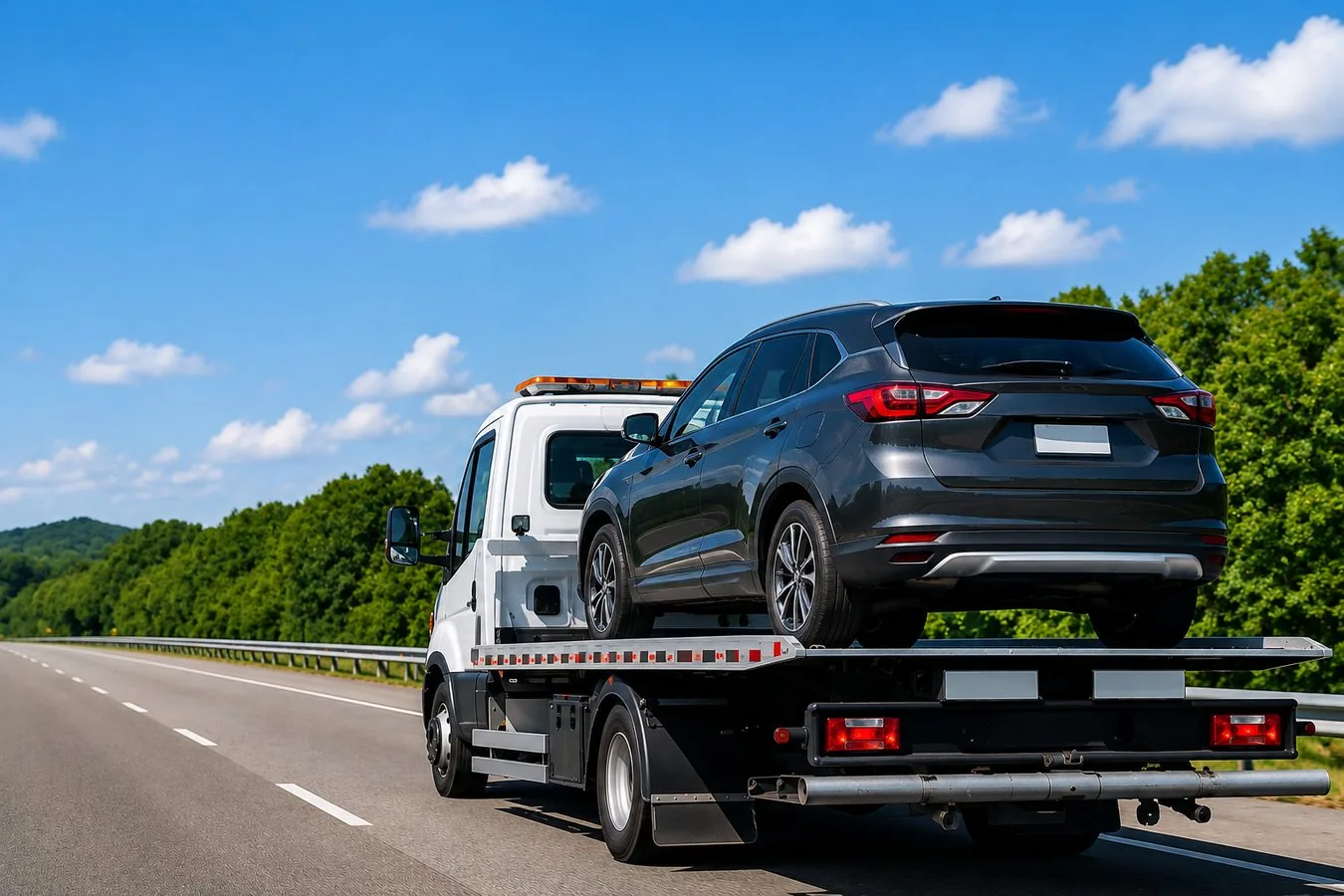
You turn the key or push the button, and instead of the engine roaring to life you get a rapid click-click-click — or one loud, dull clunk — and nothing else. It is one of the most common breakdowns we respond to across Winslow and Navajo County, and it almost always happens at the worst time: a cold desert morning in a driveway off Route 66, a parking lot near Standin' on the Corner, or the shoulder of I-40 when you are already running late.
The good news is that a clicking no-start is usually one of the cheapest and fastest problems to fix on the roadside. The clicking itself is actually a clue — it tells you a lot about what is wrong before anyone even pops the hood. This guide walks through what that sound means, the quick checks you can safely do yourself here in Winslow, and when it is time to stop guessing and call for a 24/7 jump start or a tow.
What the clicking noise is actually telling you
That click comes from the starter solenoid, a small electrical switch that sits between your battery and the starter motor. When you crank the engine, the solenoid is supposed to snap closed and send a big jolt of current to the starter, which then spins the engine over. The clicking you hear is the solenoid trying to engage but not getting enough power to follow through — so it just chatters instead.
The pattern of the click matters, and it is the single most useful thing you can notice before help arrives:
- Rapid machine-gun clicking (many clicks per second): almost always a weak or dead battery, or a corroded battery connection. There is barely enough juice to pull the solenoid in, but not enough to hold it and turn the starter.
- One single loud click and then silence: the battery may be fine, but the starter motor or the solenoid itself has failed. A jump start often will not fix this one.
- Clicking plus dim or flickering dash lights: a classic sign of a dying battery or bad ground. The lights dim because the little remaining power is being pulled toward the starter.
Knowing which of these you are hearing helps us bring the right fix on the first trip, whether that is a jump pack and a fresh set of cables or a flatbed for a failed starter.
Why Winslow's climate is hard on batteries
Winslow sits at about 4,900 feet, and our high-desert weather is rough on car batteries in both directions. Summer heat along the I-40 corridor cooks the electrolyte inside the battery and speeds up internal wear, so a battery that survived last winter can quietly lose its strength by July. Then the cold snaps roll in — nights near freezing at ZIP 86047 are common well into spring — and cold temperatures cut a battery's available cranking power by a third or more.
The result is a battery that tests "okay" on a warm afternoon but cannot turn the engine over on a cold morning. Most batteries last three to five years, and heat cycling in Navajo County tends to push them toward the short end of that range. If your battery is more than three years old and you are hearing that click, age is very likely part of the story.
Quick checks you can safely do in Winslow before calling
If you are somewhere safe — a driveway, a lot, or a wide shoulder well off the travel lane — there are a few things you can check in a couple of minutes. None of these require tools you do not already have in the glovebox.
- Try the headlights and dome light. Turn the key to the "on" position (not cranking) and watch the lights. If they are bright, your battery still has some charge and the problem may be a connection or the starter. If they are dim, yellow, or dead, the battery is the prime suspect.
- Look at the battery terminals. Pop the hood and check the two battery posts. White or greenish crusty buildup, or a cable you can wiggle by hand, means a bad connection. Even a fully charged battery cannot start the car through a corroded or loose terminal.
- Try the "wiggle and retry." With the car off, firmly reseat each battery cable by hand (they should not move). Then try to start again. If it fires up, you found a loose connection — but have it checked, because it will come back.
- Shift to neutral and back. On some vehicles a faulty safety switch stops the starter in Park. Shift to Neutral, press the brake, and try. It is a long shot, but it is free.
If none of that works, stop there. Repeatedly cranking a clicking car drains what little battery you have left and can overheat a failing starter. That is the point to call for help rather than keep turning the key.
Jump start vs. tow: which one you actually need
This is the question our dispatchers answer dozens of times a week, and the clicking pattern usually decides it. If you have rapid clicking with dim lights, a jump start is the right first move — our driver brings a professional jump pack, connects it safely, and gets the engine running so you can drive to a shop or get the battery load-tested on the spot.
But a jump start only helps if the battery is the problem. If you have a single loud click and healthy lights, the starter or solenoid has likely failed, and no amount of jumping will spin the engine. In that case the car needs a tow. We use a flatbed for most modern vehicles because it lifts all four wheels off the ground and protects the transmission and electronics — the safer choice over a wheel-lift when the drivetrain condition is unknown. Our drivers are licensed, insured, and DOT compliant, and we will deliver the vehicle to the Winslow or Holbrook repair shop you choose.
There is also the case where a jump works but the car dies again a few miles later. That points to a charging-system problem — often a failing alternator — and it means the battery was never getting recharged while you drove. According to the National Highway Traffic Safety Administration, battery and charging faults are among the most common causes of unexpected roadside breakdowns, so it is worth having the whole system checked rather than just swapping the battery and hoping.
How to avoid the clicking no-start next time
Most clicking breakdowns are preventable with a little attention, especially given how hard Winslow's climate is on batteries. A few habits go a long way:
- Test your battery twice a year — before the summer heat and before the winter cold. Any parts store in the area will load-test it free in a few minutes.
- Keep the terminals clean. A quick wipe and a smear of dielectric grease stops the corrosion that kills good batteries early in our dusty, dry air.
- Replace a battery over four years old proactively, before it strands you on the shoulder of I-40 at 5 a.m.
- Do not ignore slow cranks. If the engine has started to turn over lazily, that is your warning shot. The click is what comes next.
Whether you are near the Little Colorado River, out toward Meteor Crater, or anywhere along AZ-87, a clicking car does not have to wreck your whole day. Notice the pattern, run the quick checks, and know that help is a phone call away.
Clicking but not starting? We'll get you rolling.
24/7 mobile jump start, roadside assistance, and flatbed towing across Winslow & Navajo County. Fast, friendly, licensed and insured.
Call (615) 241-0232 NowFrequently Asked Questions
Does a clicking noise always mean my battery is dead?
Usually, but not always. A rapid click almost always points to a weak or dead battery or a bad connection. A single loud click can mean the starter motor or solenoid has failed even though the battery is fine. If a jump start does not fix it, the problem is likely the starter, and the car will need a tow to a Winslow shop.
Can you jump start my car anywhere in Winslow or Navajo County?
Yes. Winslow Towing runs 24/7 mobile jump start and roadside service across Winslow, Holbrook, Joseph City, Winona, Leupp, Sun Valley, Dilkon and the I-40 and Route 66 corridors. Typical arrival is 30 to 45 minutes. If the battery will not hold a charge, our licensed and insured drivers can flatbed the vehicle to the repair shop of your choice.
Have you ever been stranded by a clicking no-start here in Winslow? Save our number before it happens so you are ready.